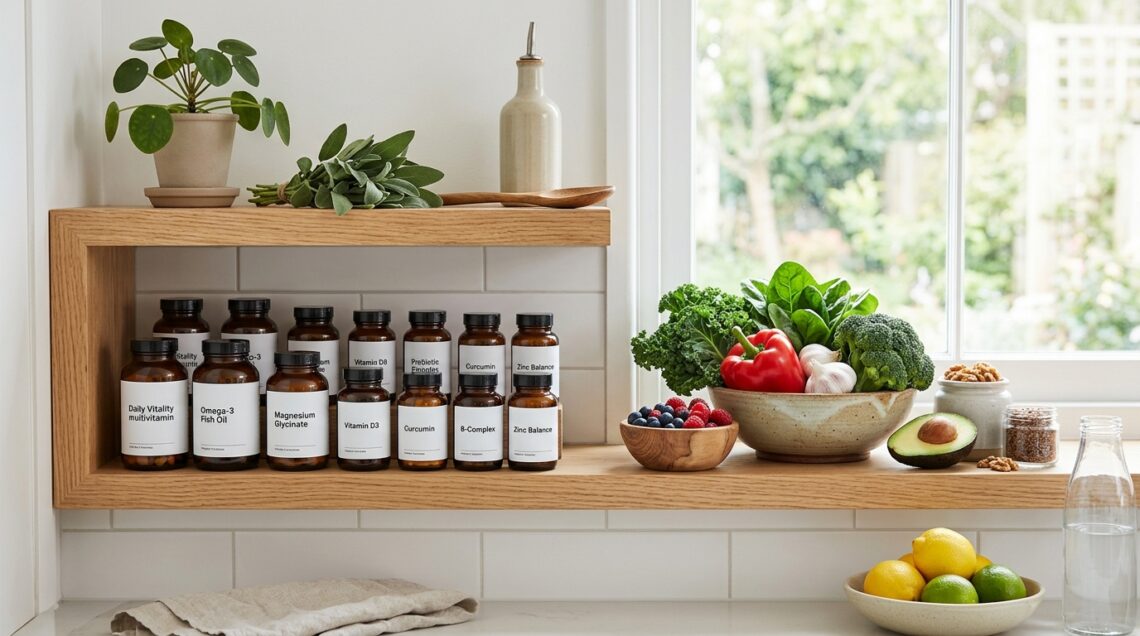
My bathroom cabinet once held a small fortune in half-used supplement bottles. I’d buy whatever a headline or a wellness influencer swore by, take it for a week, and forget about it. Eventually I stepped back and rethought my whole approach, and I want to share what I wish I’d known sooner.
The first thing I learned is that supplements are meant to supplement — to fill genuine gaps, not to replace real food or good habits. A cabinet full of pills won’t compensate for poor sleep, a nutrient-thin diet, or chronic stress. That reframing saved me a lot of money.
The second is that more isn’t better, and some supplements can interact with medications or with each other. Fat-soluble vitamins in particular can build up. This is exactly why I now talk to my doctor before starting anything, and why I sometimes get bloodwork to see what I actually need rather than guessing.
Third, quality and marketing are not the same thing. Flashy packaging and bold promises are often the opposite of what I want. I look for reputable brands and third-party testing, and I’m suspicious of anything claiming to fix everything.
I still take a few supplements, chosen deliberately, for gaps I’ve actually identified. But I’ve made peace with the fact that the foundation of my health isn’t in a bottle. It’s in the ordinary, unglamorous basics — food, sleep, movement, connection. The supplements, at best, are a small supporting act.